Development Finance
Ground-Up Development from £1m–£30m: What Lenders Look For
6 min read

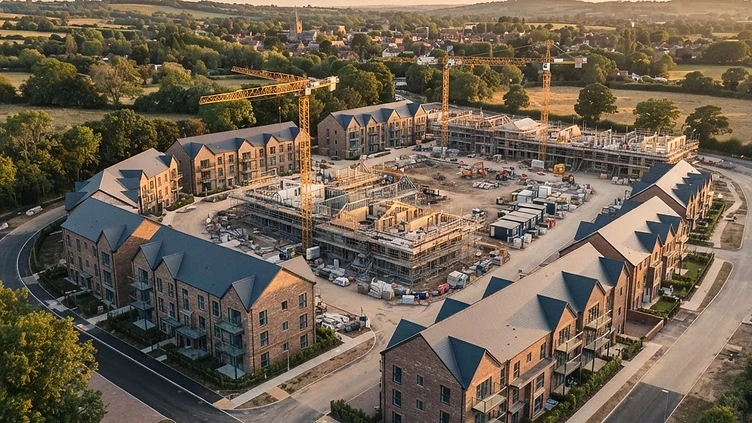
Learn what lenders demand for £1m–£30m ground-up developments, including the importance of track record, GDV stress-testing, and professional team selection.
Understanding the Lender's Perspective
For property developers operating in the £1m–£30m bracket, securing capital is rarely about the raw numbers on a spreadsheet alone. While a project’s viability is the foundation, lenders in this space are primarily assessing risk through the lens of execution. When you approach a lender for ground-up development—where you start from an empty site and build from scratch—they are looking for a comprehensive narrative that proves you can deliver the project on time and within budget.
The Developer’s Track Record: The ‘Proven Ability’ Factor
Lenders will always look at your track record before looking at the site itself. In the world of commercial development, past performance is the primary proxy for future reliability. If you are a first-time developer, you are expected to mitigate that risk by bringing on an experienced project manager or a Tier 1 contractor with a proven history of delivering similar schemes.
For established developers, lenders want to see projects of similar scale and complexity. If you have previously developed residential blocks of 20 units, jumping to a 100-unit mixed-use commercial and residential site requires explaining how you have scaled your systems, supply chain, and professional team. Being able to demonstrate that you have navigated past planning hurdles or construction delays effectively is often more valuable to a lender than simply showing a portfolio of finished assets.
GDV and the Reality of Stress Testing
Gross Development Value (GDV) is the total estimated value of a property development once it is completed and ready for sale or rental. Lenders view this figure with a healthy dose of scepticism. They will subject your GDV to rigorous stress testing, often applying a 'haircut'—a percentage reduction to your valuation—to ensure the loan remains safe even if the market shifts downward during the build phase.
In the current UK climate, lenders are scrutinising exit strategies. Whether you intend to sell the units or refinance into a long-term investment loan, they will look at the local demand for the specific asset class you are building. If you are developing industrial units in a regional hub, they will compare your rental yields against recent local benchmarks rather than relying on national averages. Understanding how to structure your capital stack is essential, and you can explore your options through our dedicated specialist development finance solutions.
Site Specifics and Planning Certainty
In ground-up development, planning permission is the single biggest risk factor. Lenders generally prefer sites with full, unfettered planning consent. While some will consider bridge-to-development facilities where planning is pending, the interest rates reflect that heightened uncertainty. If you are proposing a project with Section 106 agreements—legal requirements for a developer to contribute to local infrastructure—ensure these are clearly itemised, as they impact your total cost of development and, by extension, the lender’s view of your cash flow.
Beyond planning, lenders focus heavily on 'deliverability.' This includes site accessibility, ground conditions (geotechnical reports are non-negotiable), and the complexity of the build. If your site requires significant demolition or environmental remediation, lenders will demand a higher contingency budget. A project with a clean, shovel-ready site will almost always secure more favourable lending terms than one burdened by complex logistical challenges.
The Professional Team
Who you work with matters as much as what you are building. Lenders will vet your professional team—the architects, the quantity surveyors, the planning consultants, and your main contractor. In the £1m–£30m range, lenders look for stability. They want to see that your contractor has the balance sheet to withstand a sudden rise in materials costs without stalling work on your site. If your team has worked together on previous schemes, this is a significant advantage, as it suggests a pre-existing communication rhythm that reduces the likelihood of project drift.
Key Takeaways
- Track record is paramount: If you lack direct experience, bridge the gap by hiring a professional team with a verifiable history of delivering similar project types and scales.
- Stress-test your GDV: Assume the lender will apply a conservative haircut to your valuation; your numbers must work even if the market softens during the construction phase.
- Prioritise planning certainty: Secure full planning permission early, and be transparent about Section 106 obligations and environmental remediation requirements to avoid lending delays.
- Select contractors for stability: A contractor’s financial health is as critical as their tender price; ensure they have the liquidity to absorb potential supply chain volatility.