Development Finance
Staged Drawdowns: How Development Funding Actually Releases
6 min read

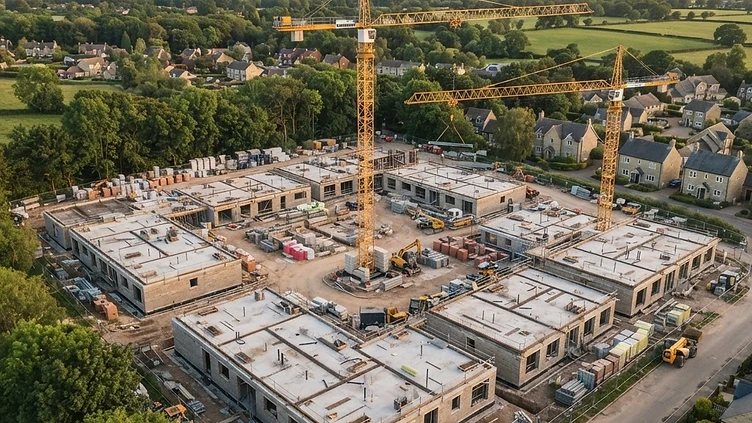
Master the complexities of staged drawdowns in development finance. Learn how site monitoring and milestone management impact your UK property project's cash flow.
Understanding the Flow of Capital
For property developers, securing the initial term sheet is only the first half of the battle. The true complexity of development finance lies in the drawdown process. Unlike a standard buy-to-let mortgage, where funds are released in one lump sum upon completion, development finance is delivered in 'staged drawdowns'. This means the lender releases money in increments, directly linked to the physical progress of your construction project.
At Mclains Commercial, we find that many experienced investors are comfortable with the lending criteria but underestimate the importance of the valuation and monitoring process. If you are preparing for a new project, understanding how development finance releases cash is essential to maintaining momentum and avoiding costly site delays.
The Role of the Monitoring Surveyor
Central to this process is the Monitoring Surveyor (MS). The MS acts as the lender's eyes and ears on-site. Their role is to verify that the work you claim has been completed is, in fact, completed to the necessary standard and that the associated costs are accurate.
Before any funds are released, you will submit a drawdown request. This request outlines the work finished during the previous period. The MS will then visit the site to conduct a formal inspection. They are not there to act as your project manager, but they are looking for evidence that the build is tracking on schedule and within the agreed-upon budget. Once they sign off on the progress report, the lender triggers the release of funds.
Aligning Milestones with Cash Flow
Drawdowns are usually structured around pre-defined milestones. Common stages include:
- Site preparation and foundations.
- Sub-structure and drainage.
- Superstructure (the 'shell' of the building).
- First fix (plumbing and electrical wiring).
- Second fix and finishing.
- Practical completion.
Crucially, these stages must be negotiated at the start of your facility agreement. If your milestone structure does not align with your contractor's payment schedule, you risk a 'cash gap'. A cash gap occurs when you owe your builders for work completed, but the lender has not yet released the funds for that specific milestone. Managing this alignment is a cornerstone of professional project management.
The Concept of 'Retentions'
Even when a milestone is reached, you rarely receive the full amount associated with that stage. Most lenders hold back a 'retention'—typically 10% of the drawdown amount—until the project reaches a later phase or final completion. This protects the lender's position, ensuring that there is a financial incentive for the developer to finish the project to a high standard, rather than abandoning it when the construction is mostly complete.
Understanding how these retentions affect your working capital is vital. You must have enough liquid capital, or a sufficiently flexible contingency fund, to bridge the gap created by these retained sums until they are released at the end of the project.
Managing Variations and Overruns
Property development is rarely linear. Unexpected ground conditions, material price inflation, or design changes can force a variation in your project plan. If you need to spend more than anticipated, you cannot simply expect the lender to increase the drawdown amount.
If a project goes over budget, you will usually need to demonstrate that you have the 'equity'—your own capital—to cover the overrun before the lender will agree to release further funds. This is why a robust contingency fund, typically 5% to 10% of the build cost, is non-negotiable for serious investors. The lender wants to see that you are fully committed to the project's success and have the means to handle adversity without stalling the build.
Communication is Your Best Asset
When a drawdown is delayed, it is almost always due to documentation, not malice. If you can keep a rigorous audit trail of invoices, site photographs, and updated build schedules, the Monitoring Surveyor's job becomes significantly easier. When the MS reports back to the lender with confidence in your project management, funds move faster. When information is missing, fragmented, or ambiguous, the drawdown process grinds to a halt. Treat your lender and the MS as partners, not adversaries, and you will find the cash flow process runs significantly smoother.
Key takeaways
- Staged drawdowns are released based on validated build progress rather than fixed time intervals.
- The Monitoring Surveyor is the gatekeeper of your capital; maintain clear records and site documentation to ensure smooth releases.
- Align your construction payment schedule with your funding milestones to avoid damaging cash gaps.
- Factor in lender retentions and potential project overruns when calculating your required working capital.
- Proactive communication with your lender during unexpected site variations prevents long-term funding bottlenecks.